
Webinars within the DigiFLEd project have evolved beyond regular meetings into a dynamic space for sharing experience, where ideas emerge through dialogue and practices find immediate application. Step by step, we continue to explore new approaches to language teaching, combining academic tradition with digital innovation.
This time, participants joined the practical webinar “Digital Text Analysis Tools for Teachers and Students,” organised by V. N. Karazin Kharkiv National University. The event brought together teachers, students, and early-career researchers interested in the meaningful integration of digital tools into language education.
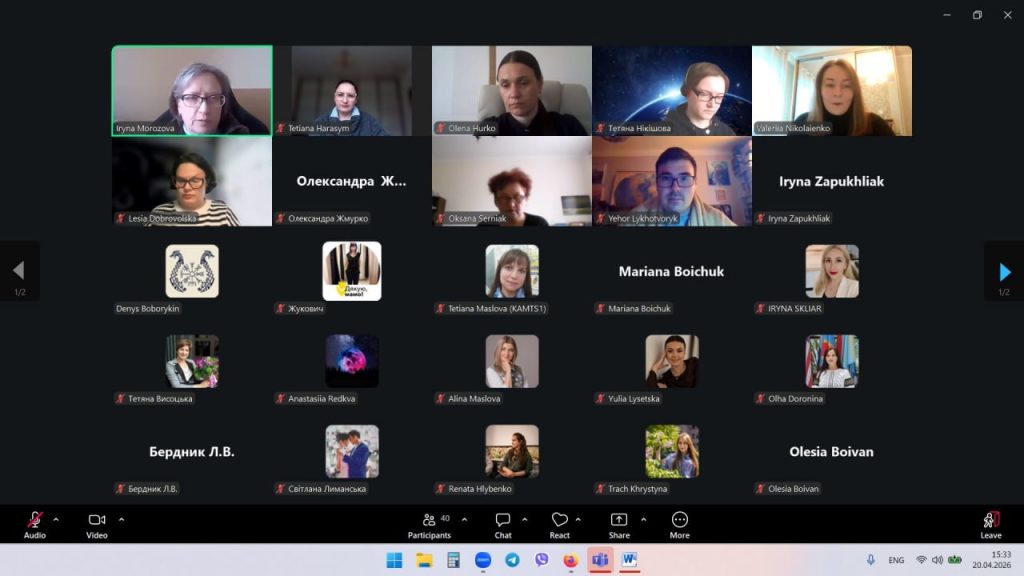
The speakers, Iryna Morozova and Valeriia Nikolaienko, invited participants to look at text from a new perspective – not only as an object of reading, but as a space for exploration. They demonstrated how modern digital tools can support the transition from basic analysis to deeper interpretation.
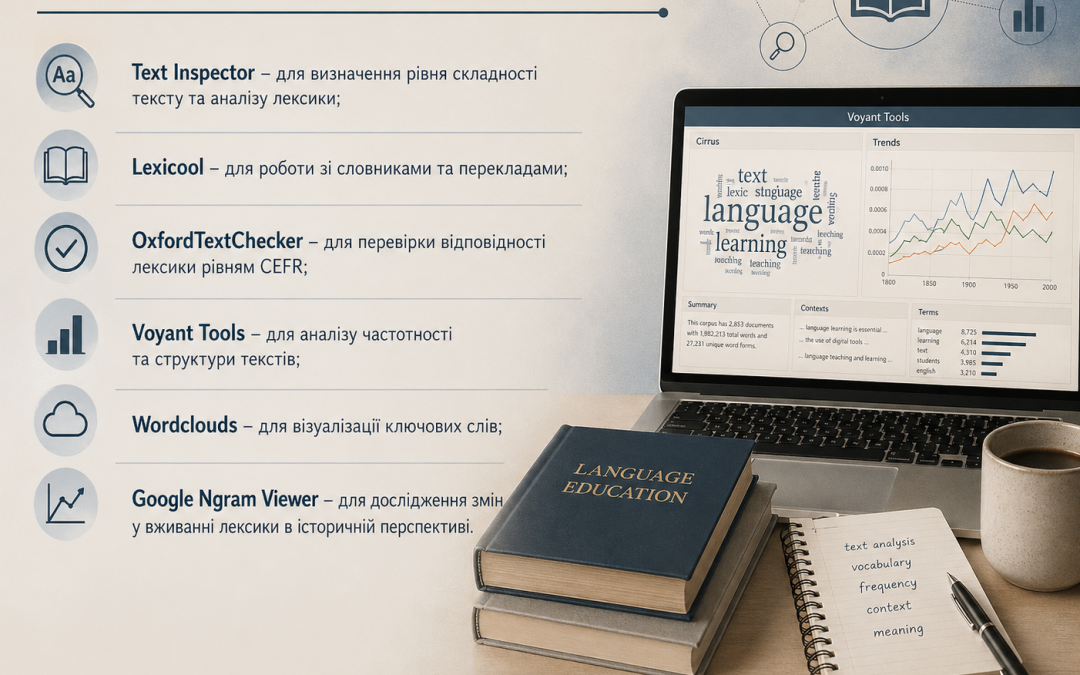
Participants were introduced to a range of tools, including:
- Text Inspector – for analysing text complexity and vocabulary;
- Lexicool – for working with dictionaries and translations;
- Oxford Text Checker – for checking vocabulary against CEFR levels;
- Voyant Tools – for analysing word frequency and text structure;
- Wordclouds – for visualising key vocabulary;
- Google Ngram Viewer – for exploring historical trends in language use.
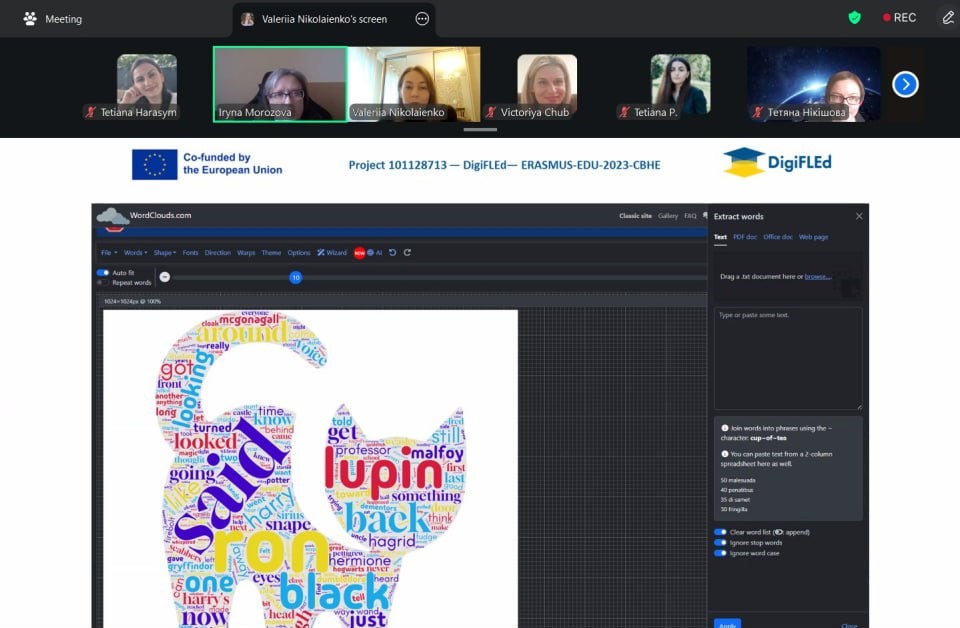
Particular attention was given to the practical application of these tools, from developing teaching materials to supporting student research projects.
Digital tools open up new possibilities for language education, transforming analysis into inquiry and learning into a process of shared discovery and reflection.