
As digital technologies become an increasingly important part of university education, the way we teach is changing with them.
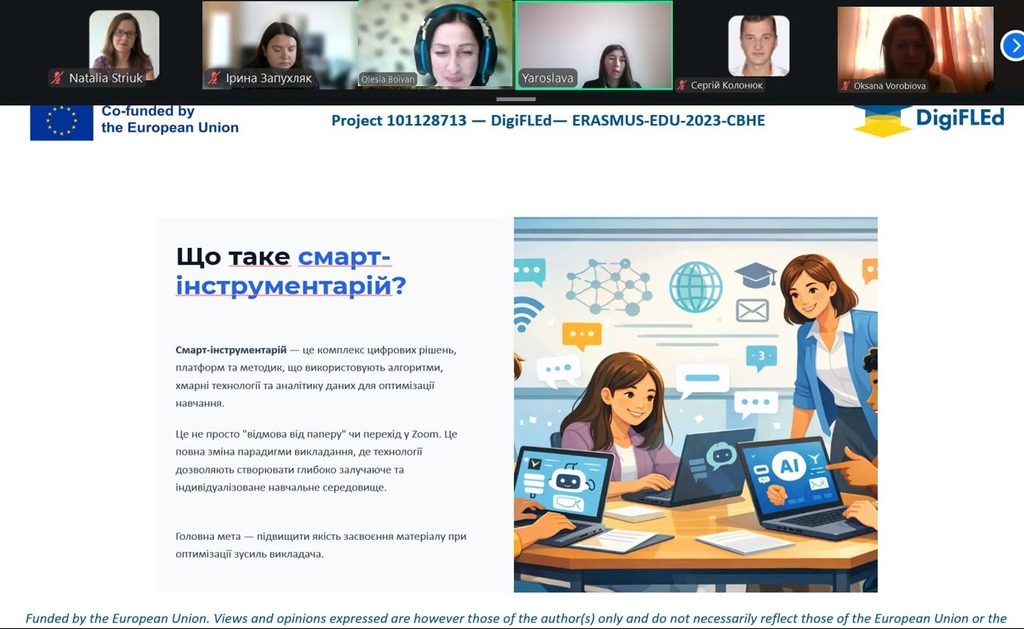
On 12 August, DigiFLEd brought educators together for the interdepartmental online methodological seminar ‘Smart Education: Updating the Teacher’s Methodological Toolkit in the Era of Digital Transformation.’
Here, the conversation moved beyond individual applications toward a larger transformation of university teaching.
Smart education brings together cloud technologies, digital learning environments, data-informed approaches, automation and personalisation. Yet perhaps the most interesting question discussed during the seminar was surprisingly human: What should teachers do with the time that technology gives back to them?
When routine assessment, administration and repetitive processes can be partly automated, lecturers gain something exceptionally valuable – time. That time can be redirected towards designing creative learning experiences, providing individual feedback, mentoring students and, crucially, communicating with them.
This points to an important paradox at the heart of DigiFLEd: the more intelligently we use technology, the more space we may create for human interaction.Research generates new ideas. International exchange challenges and refines them. Digital educational products turn them into accessible resources. Workshops bring them into teaching practice. And teachers and students give them life.
For DigiFLEd, the summer of 2026 was therefore anything but a quiet season. It became a laboratory for what comes next.