
Summer at a university is often associated with quieter corridors and a slower academic rhythm. For DigiFLEd, however, the summer of 2026 unfolded quite differently. It became a season of international exchange and new educational experiences – a time when ideas developed within the project travelled from academic discussions to digital learning spaces and back into the classroom.
At an international academic conference hosted by Vasyl’ Stus Donetsk National University on 18–19 June, the DigiFLEd team shared its experience of using collaborative online technologies to develop the communicative competence of philology students.
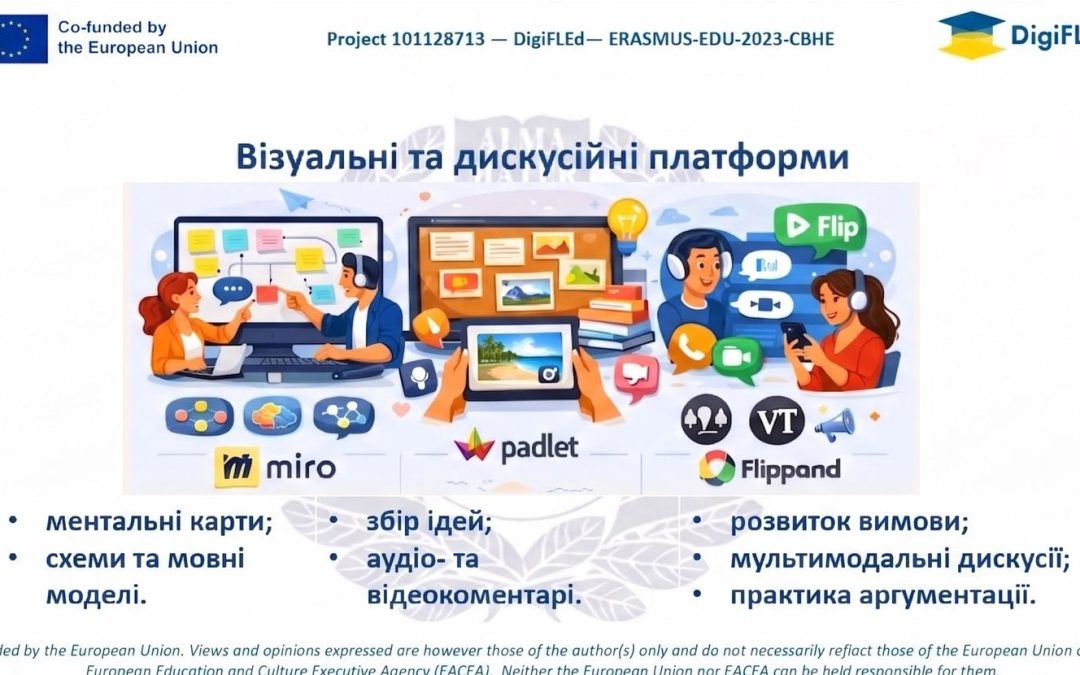
What began as a research presentation quickly developed into a wider professional conversation. Discussions moved from collaborative learning to chatbots, from visualisation with Miro to generative AI and personalised language learning. Different technologies raised different questions, but they all pointed in the same direction: digitalisation is no longer an optional addition to foreign-language education. It is changing how students communicate and learn.
Digital innovation, however, was only one part of DigiFLEd’s international story that summer.
At Palacký University Olomouc in the Czech Republic, DigiFLEd presented the online course ‘Ukrainian Language and Culture’ to an international academic audience.
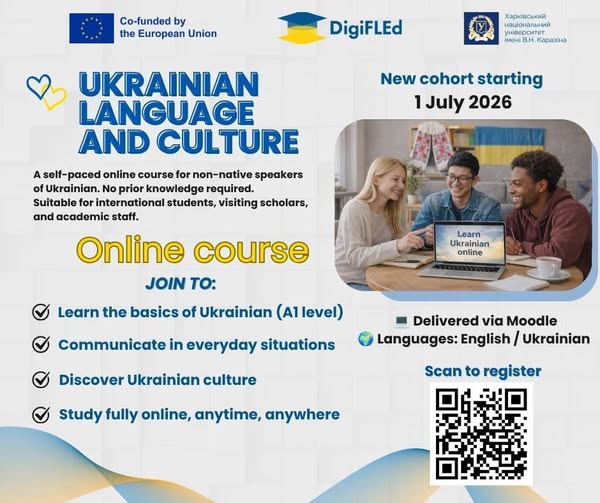
The course reflects another important dimension of the project. Digital education can connect learners not only with knowledge, but also with languages, cultures and communities. Combining Ukrainian at A1 level with an introduction to the country’s culture, traditions and identity, the course creates an accessible entry point to Ukraine for international learners.
In July, the course was further developed as part of the project. In July, V. N. Karazin Kharkiv National University opened a new edition of the “Ukrainian Language and Culture” course on its Moodle platform, welcoming non-native speakers to learn Ukrainian at their own pace. With the first cohort having successfully completed the course, DigiFLEd was ready to welcome a new community of learners.
By July, it was time to bring these ideas closer to everyday teaching practice.
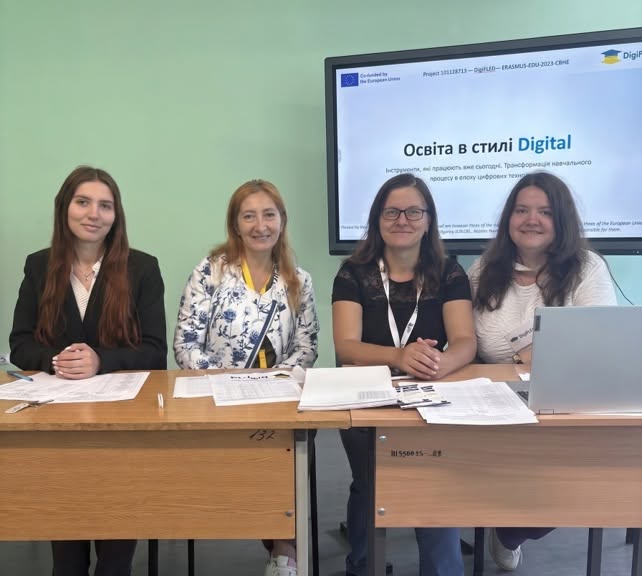
On 28 July, the DigiFLEd team at Vasyl’ Stus Donetsk National University brought students and lecturers together for the hands-on workshop ‘Education in Digital Style: Tools That Work Today.’
The emphasis was on doing rather than simply discussing. Participants worked with collaborative environments such as Miro and Padlet, explored Mentimeter and Slido for interaction, experimented with Kahoot! and Quizizz, considered the possibilities of LMS platforms, and examined how generative AI can support personalisation, content development and assessment.
The experience highlighted a simple but important principle: digital transformation is not about using as many tools as possible. It is about choosing the right tool for the right learning purpose.
For DigiFLEd, July 2026 was about turning new ideas into real learning experiences.